Superstitions Surrounding Dice Throws and Their Carryover Effects in Regulated Online UK Craps Environments
Avery Foster · Sep 25, 2026

Superstitions Surrounding Dice Throws and Their Carryover Effects in Regulated Online UK Craps Environments
Superstitions tied to dice throws trace back centuries across various cultures, where players developed rituals and beliefs around number sequences and throw mechanics. These practices moved into modern regulated online UK craps platforms, where digital representations of dice rolls prompt similar patterns of behavior even though random number generators determine outcomes.
Origins of Dice-Related Beliefs in Traditional Settings
Historical records show that dice games in ancient civilizations carried associations with fate and luck, leading participants to avoid certain numbers or perform specific actions before rolls. Observers note that such customs persisted through medieval Europe into 20th-century American casino culture, where craps shooters developed routines like blowing on dice or selecting particular sets from the table. Research from the University of Nevada's gaming studies indicates these habits cluster around perceived streaks, with data revealing repeated avoidance of specific combinations during extended sessions.
Transition to Digital Formats and Persistent Behaviors
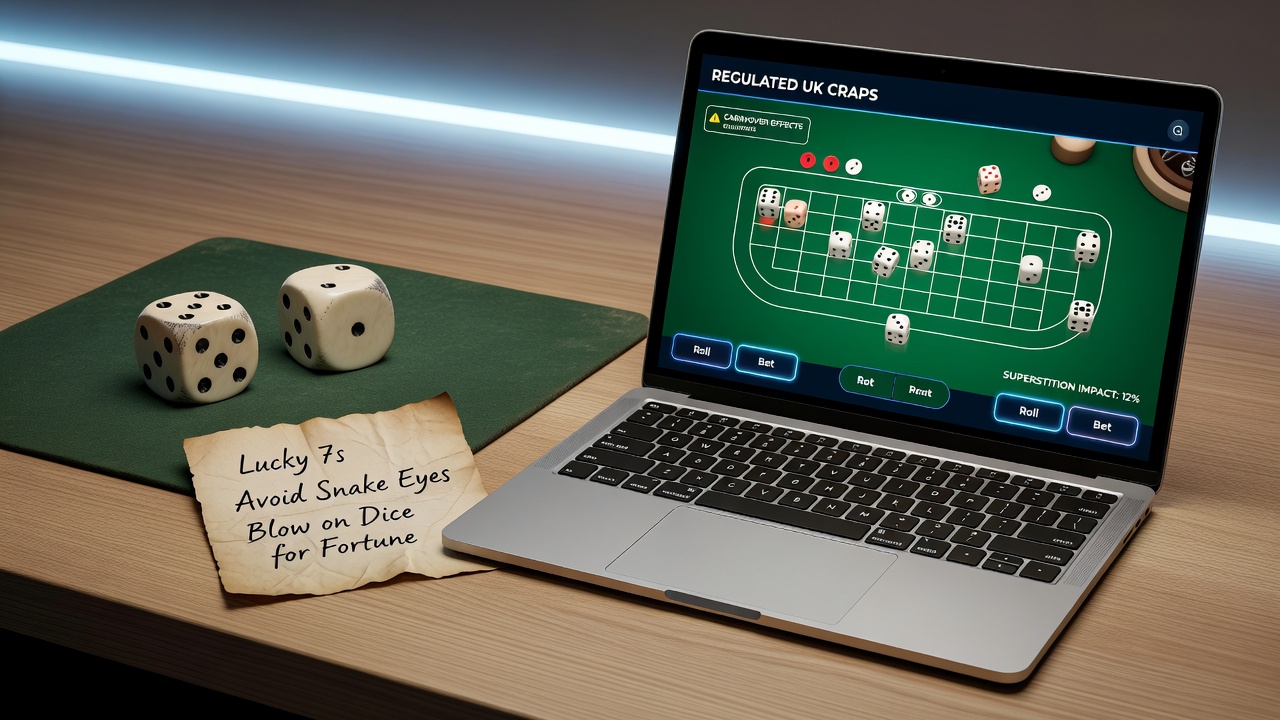
Regulated online UK craps environments replicate physical dice visuals and mechanics through certified algorithms, yet player logs demonstrate carryover of traditional rituals. Individuals often select betting options or timing based on prior roll histories displayed on screen, applying physical-world logic to virtual sequences. Studies conducted by the Canadian Centre on Substance Use and Addiction highlight how interface elements such as animated dice trajectories reinforce these associations, prompting users to repeat actions that once accompanied real throws. Figures from industry reports show elevated engagement with pattern-based wagering during peak evening hours across licensed platforms.
Documented Player Rituals and Their Digital Adaptations
Common practices include verbal cues or device interactions before confirming bets, which mirror table-side habits observed in land-based venues. One study revealed that participants in virtual sessions frequently pause between rounds, echoing the shooter rotation cycles familiar from physical tables. Data collected through platform analytics points to increased bet adjustments following consecutive low or high outcomes, despite the independent nature of each generation cycle. Those who track session metrics across multiple sites report similar tendencies toward number clustering beliefs, where certain totals receive preferential treatment after specific preceding results.
Regulatory Context and Behavioral Data Through 2026
Licensed operators in the UK maintain strict RNG certification standards that eliminate physical biases, yet behavioral patterns continue. Upcoming industry conferences scheduled for September 2026 will examine how interface design influences these carryover effects, drawing on aggregated data from European and North American markets. Reports from the Australian Gambling Research Centre note comparable trends in virtual dice games, where visual feedback loops sustain ritualistic timing even under audited systems. Players often adjust wager sizes or types according to displayed histories, applying frameworks developed in physical environments to algorithm-driven results.
Statistical Patterns and Cross-Platform Observations
Analysis of session data across multiple licensed sites reveals clusters of activity around perceived momentum shifts, with users extending play after certain virtual outcomes. External research links these observations to broader psychological mechanisms documented in gambling studies, where sequential thinking persists regardless of randomness guarantees. Regulatory bodies in jurisdictions outside the UK, including oversight from the Nevada Gaming Control Board, provide comparative benchmarks showing similar ritual persistence in digital adaptations of classic dice games. Evidence from academic papers published in 2025 underscores that visual and auditory cues in online interfaces sustain engagement patterns tied to historical superstitions.
Conclusion
Superstitions surrounding dice throws maintain influence in regulated online UK craps settings through adapted behaviors and interface interactions. Available data from international research sources documents these patterns without altering underlying algorithmic fairness, and ongoing studies scheduled through September 2026 continue to track their evolution across digital platforms.